Seafood Task Force Launches Pilot Grievance Mechanism for Tuna Crew Members with Humantics and Humanity Research Consultancy - Dec '25
Industry-First Program to Empower Workers and Drive Accountability in Global Tuna Supply Chain
Indonesia, 3rd December, 2025
The Seafood Task Force (STF) has officially launched its Workers' Voice & Grievance Mechanism pilot project for tuna crew members, selecting Humantics and Humanity Research Consultancy (HRC) to help implement the program. This workstream marks a significant milestone in the STF's commitment to protecting migrant fishers and establishing credible pathways for workers to safely report grievances without fear of retaliation.
Following a rigorous proposal review process, Humantics and HRC were selected by STF member consensus at the October 2025 Summit, where tuna subgroup members voted on five finalist proposals. Humantics secured the most votes, demonstrating strong industry confidence in their approach and expertise.
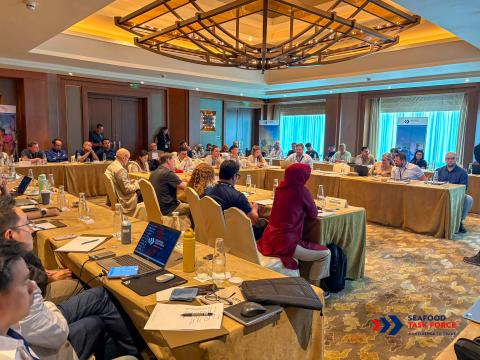
The grievance mechanism pilot represents a direct response to persistent challenges facing tuna crew members, particularly Indonesian fishers working on Taiwan-flagged distant-water vessels. Despite existing regulatory frameworks in both Indonesia and Taiwan, workers lack safe, credible channels to report labor violations, wage theft, unsafe conditions, and other abuses.
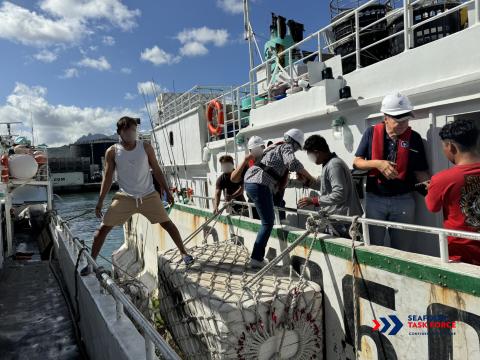
Over an 18-month implementation period, Humantics and HRC will establish an effective, scalable grievance mechanism on Taiwan-flagged tuna fishing vessels employing Indonesian crew members. The work encompasses identification of participating vessels, buyers and operators; development of operational protocols and governance frameworks aligned with the STF Code of Conduct and Principle 31 of the UN Guiding Principles on Business and Human Rights (UNGPs). The partners will deploy a secure digital case management platform to track, investigate, and resolve grievances while maintaining strict confidentiality and data integrity.
A critical component of the project involves comprehensive outreach and training programs conducted in workers' native languages during port calls, ensuring fishers understand their rights and how to safely access the mechanism.
Throughout implementation, the STF will track performance against key indicators and conduct regular data reporting, culminating in a comprehensive end-term evaluation to inform global scalability.
The mechanism will align with international best practices and the UNGPs' eight effectiveness criteria for grievance mechanisms: legitimacy, accessibility, predictability, equity, transparency, rights-compatibility, continuous learning, and stakeholder engagement. By leveraging trusted civil society organizations and unions to operate the helpline and conduct worker outreach, the project prioritizes building worker trust—essential for workers to safely report concerns in contexts where retaliation risks remain high.
STF Executive Director Martin Thurley commented: "This is a crucial workstream for STF and its launch represents an important moment for the tuna industry. Combining our commercial member horsepower with Humantics and HRC expertise, we are establishing a model that can create real, tangible pathways for workers to be heard and protected. This is about moving beyond compliance to creating genuine accountability and respect for worker dignity throughout our supply chains."
The project builds on the STF's previous work, including the groundbreaking August 2025 research on recruitment fees in the Indonesia-Taiwan corridor, the expanded training program for Thai government port inspectors in September 2025, and the inaugural Indonesia Summit in May 2025. These initiatives have provided critical insight into the barriers workers face and the multi-stakeholder coordination required to drive meaningful change. The pilot will operate under the governance and oversight of the STF Worker Voice Working Group, ensuring alignment with the broader STF mission and accountability to member companies committed to ethical seafood production.
Following the pilot period, the STF intends to scale the grievance mechanism to additional vessels, geographies, and potentially other segments of the seafood supply chain. The comprehensive evaluation and roadmap developed through this project will serve as a blueprint for industry-wide implementation, contributing to the STF's vision of fully traceable, ethically produced, and environmentally responsible seafood.
-Ends-
About the Seafood Task Force:
The Seafood Task Force (STF) was established in 2014 to restore global confidence to trade, following concerns about social and environmental abuse in global tuna and shrimp supply chains. It is made up of over 50 major retailers, brands, food service companies and their supply chain partners.
The STF drives supply chain oversight at scale, pioneering a pro-competitive approach that makes it easier for its members to meet international standards and growing due diligence requirements.
The STF is a US-based, not-for-profit trade association established for the seafood industry by the seafood industry. Its vision is a future where its members’ seafood supply chains are fully traceable, free from the risk of human rights violations and free from environmental degradation.
For more information: https://seafoodtaskforce.global/
About Humantics:
Humantics is a Hong Kong-based consultancy specializing in supply chain transparency, labor rights, and sustainable business practices. Working in partnership with Humanity Research Consultancy, Humantics brings extensive expertise in grievance mechanism design and implementation, human rights due diligence, and worker-centered approaches to social responsibility.
About Humanity Research Consultancy (HRC):
Humanity Research Consultancy is a specialist organization focused on human rights and labor standards in global supply chains, with particular expertise in trauma-informed approaches, worker engagement, and grievance mechanism implementation in complex labor contexts.