Reflecting on Impact in 2025 and Looking Ahead to 2026 – a New Year Message from the Seafood Task Force Secretariat – Jan ‘26
As we begin 2026, we can reflect on the significant progress the Seafood Task Force (STF) has made in 2025 whilst charting our course ahead.
2025 marked the tenth anniversary of our inception. So it was gratifying to see our role in promoting systemic change in a report commissioned by Humanity United and The Freedom Fund.
REFLECTING ON 2025
The STF has become an important industry actor and driver of positive change through step-by-step and practical engagement on-the-ground.
Our work across key markets demonstrates this evolution. In India, we've made rapid progress navigating the complexities of the shrimp supply chain, particularly in engaging with fishing vessel owners supplying marine ingredients for feed.
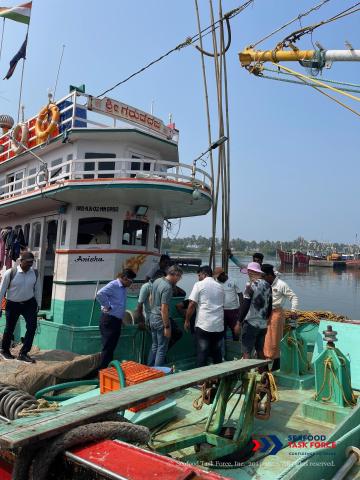
We've harnessed the expertise and resources of both buyer members and supplier members to develop and implement continuous improvement, addressing media allegations on child labor at work and restriction of freedom of movement at worker dormitories.
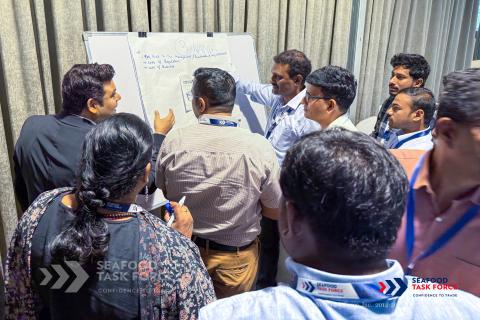
Within our first year of working in India, we've provided access to vessels that were previously difficult to reach. And our Train-The-Trainer program in Visakhapatnam brought together processors, feed mills, fishmeal plants and government representatives including MPEDA, along with its affiliate bodies (the National Centre for Sustainable Aquaculture - NaCSA) and (the Network for Fish Quality Management & Sustainable Fishing - NETFISH), which have all laid the practical groundwork for systematic change.
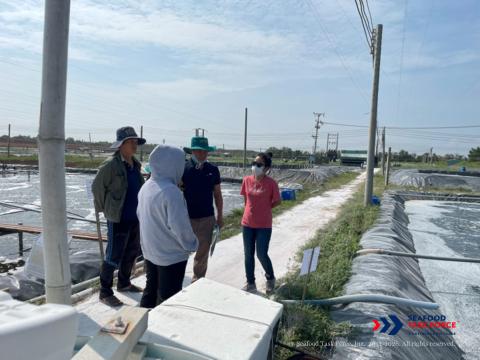
In Vietnam, we started working with members on the framework to provide workers at small and medium scale farms with legal employment contracts, which paves the way for sufficient payment of wages and legal benefits to workers.
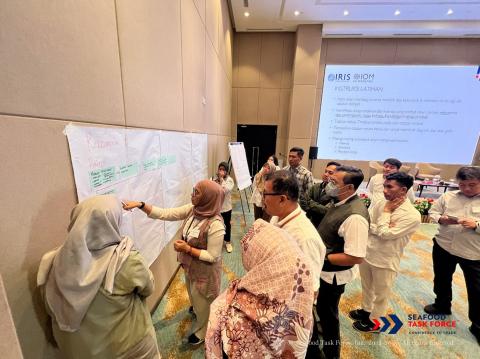
In Indonesia, on-the-ground work has also been central to our annual program. We held our inaugural summit last May and our Tangerang workshop in November brought together officials from KP2MI (New ministry on Indonesian Migrant Worker Protection) and KKP (Ministry of Maritime Affairs and Fisheries) to align on fair and responsible recruitment practices.
We released landmark research with Impactt Limited into labor recruitment practices affecting Indonesian fishers on Taiwan’s distant-water tuna vessels, highlighting how multiple intermediaries can create complicated debt cycles.
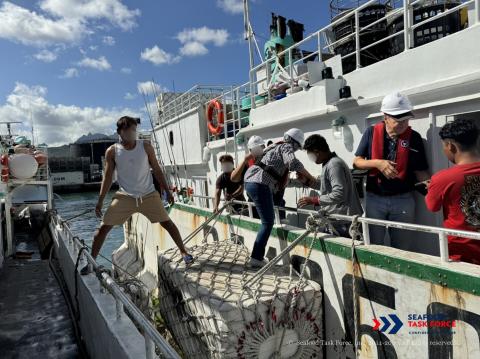
The launch of our Workers' Voice & Grievance Mechanism pilot at the end of 2025 - working with social risk experts Humantics International and Humanity Research Consultancy (HRC) - represents another key milestone. We are establishing safe reporting channels for vessel crew - an 18-month pilot scheme that will test how industry-led initiatives such as STF can create accountability for workers.
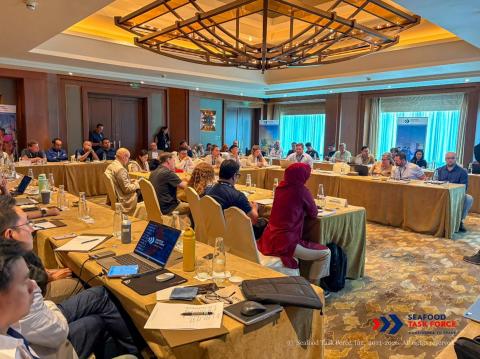
During the 2025 STF Summit in Bangkok, the STF Tuna sub-group approved the launch of a new STF Risk Based Assurance Program that will cover STF Tuna Members’ supply chains through the systematic on-board assessment of a large number of tuna fishing vessels based on area coverage defined in the STF Membership Agreement.
The successful approval and launch of this new program reflect the willingness of STF members to collaboratively address and remediate some of the most relevant social challenges that the industry is facing.
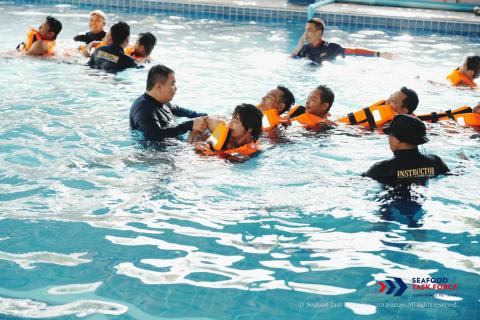
In Thailand, we expanded our Port In – Port Out (PIPO) inspector training program on victim screening and identification skills, involving 55 inspectors from both the Department of Labor Protection and Welfare and the Department of Fisheries, across 17 centres in 12 provinces. In 2025, the STF also expanded collaboration throughout the fisher community, working with a diverse range of organizations, including the National Fisheries Association of Thailand (NFAT) and local government agencies.
Buyer members and supplier members have worked together to develop and finalize an easy and ready-to-use traceability tool. This practical tool enables members along the supply chain to demonstrate the traceability from vessel to plate of Thai shrimp, Indian shrimp, and Vietnamese shrimp in line with the STF Shrimp Traceability Code of Conduct and Protocol approved by the board.
The STF’s membership continued to grow in 2025 with new members joining from India, USA, Canada, Indonesia, Mexico and Vietnam. Novotel also became our first hospitality member, a significant milestone demonstrating a growing recognition that supply chain responsibility extends across all sectors.
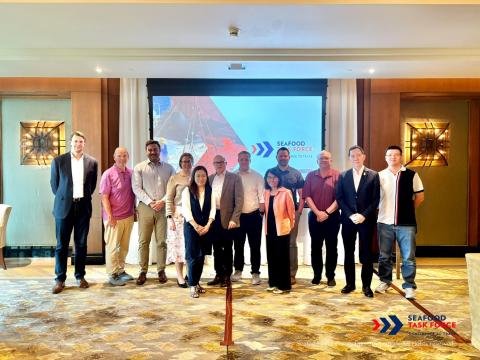
Our December Board meeting marked a watershed moment with the unanimous adoption of a new strategic framework for 2026-2030. Following rigorous consultation, including more than 40 stakeholder interviews, we have set an ambitious seven-point direction, which includes: governance reform; ISEAL Alliance alignment; distinct strategies for tuna and shrimp; climate targets as core environmental priority; geographic focus on India, Vietnam, Indonesia and Ecuador, whilst maintaining the US as primary market with selective EU engagement; and developing a tiered membership model that's fair and sustainable.
LOOKING AHEAD TO 2026
The Board also recognized 2026 as a transition year, which will focus on implementing our new strategic vision whilst honouring existing commitments.
Our grievance mechanism pilot and new STF Risk Based Assurance Program for the tuna industry will be the litmus test for whether we can create scalable, worker-centred solutions, also with more engagement to support vessel owner and recruitment agencies in Taiwan, Indonesia, and China. We will focus more on India, Indonesia, Vietnam and Ecuador as we extend the STF model successfully tested and rolled out in Thailand.
However, the regulatory landscape is intensifying. Due diligence requirements are tightening. Stakeholder expectations are rising. The question isn't whether these pressures will intensify —they will. The choice is whether we invest now in collaborative solutions that deliver measurable impact or wait for the next crisis to force our hand.
If you are a retailer, brand or seafood supply chain partner and you are interested in finding out how you can become a member of the Seafood Task Force, please make contact via the contact page.
STF Secretariat Team