Seafood Task Force Continues Capacity Building Program in Indonesia with Workshop for Manning Agencies - Dec '25
Industry & Government Unite to Strengthen Protections and Streamline Recruitment Processes
Pemalang, Indonesia, 18th December, 2025
The Seafood Task Force (STF) has carried out a 3 day capacity building workshop in Pemalang, Central Java, bringing together recruitment agencies, government officials and law enforcement to advance fair and ethical recruitment practices for Indonesian migrant fisheries workers.
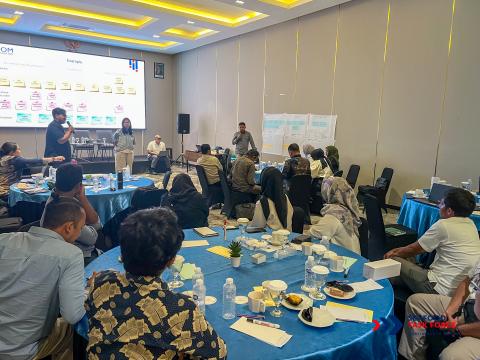
Organized in tandem with the International Organization for Migration (IOM) Indonesia, the workshop saw 18 manning agencies participate alongside representatives from the Ministry of Marine Affairs and Fisheries (KKP), the Ministry of Protection of Indonesian Migrant Workers (KP2MI) and the Indonesian Criminal Investigation Department (Bareskrim) from the Indonesian National Police (POLRI).
The workshop held on November 17-19 focused on practical implementation of fair and ethical recruitment principles within Indonesia's tuna and shrimp supply chains, including:
- empowering manning agencies with the knowledge and tools needed to comply with evolving regulatory frameworks while protecting migrant workers throughout the recruitment and deployment process, and
- providing the opportunities for STF and IOM to identify key barriers and enablers on the ground that affect the feasibility for the manning agencies to apply fair and ethical recruitment.
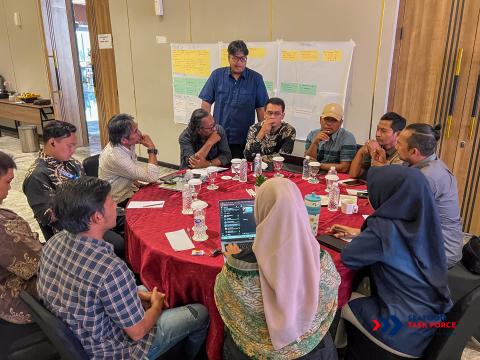
Participants engaged in detailed discussions covering the recruitment journey for migrant fisheries workers—from initial information gathering, social media management to registration, document fulfillment, training, pre-departure orientation, licensing (SIP3MI/SIP2MI), departure, and eventual repatriation. Sessions also focused on transparency around recruitment steps and costs, which currently average IDR 28-30 million (~USD 1,650-1,850) per worker and are typically recovered through salary deductions over six to seven months.
The workshop also addressed pressing regulatory challenges, including the practical difficulties faced by manning agencies that have passed SP3MI technical licensing but cannot utilize permits due to the subsequent recruitment permit (SIP2MI) mechanism that is still not operational for sea-based work sector.
Due to this challenge, many agencies continue to rely on outdated SIUKAK permits (permit under Ministry of Transportation), creating confusion and inconsistencies between the regulations and the actual implementation. In addition, the workshop also facilitated consultation with the manning agencies on the refinement of technical screening instruments for companies who apply for SIP3MI licensing.
STF Executive Director Martin Thurley commented: "This crucial program of workshops allow us to directly work with manning agencies, helping to ensure that the regulatory frameworks developed with government partners can translate into real protections for migrant fishers. The candid dialogue about cost structures, licensing challenges, and operational realities will inform our ongoing efforts to create a recruitment system that is both ethical and economically sustainable."
The Indonesian Criminal Investigation Department provided legal outreach during the workshop, enhancing manning agencies' understanding of compliance requirements under Indonesian law governing worker placement. Participants expressed strong support for STF initiatives to promote ethical recruitment, with expectations that clearer regulations and improved business processes will follow.
Key outcomes included agreement on the need for enhanced government involvement in Pre-Departure Orientation (OPP) to standardize worker protections, solutions to address regulatory dualism affecting licensing procedures, and development of more transparent cost structures to reduce the financial burden on migrant workers. Stakeholders emphasized the importance of balancing the interests of agencies, crew members, and vessel owners within an open recruitment system.
This workshop program builds on the STF's sustained engagement in Indonesia, including the inaugural Indonesia Summit in May 2025, the ground-breaking August 2025 research on recruitment fees in the Indonesia-Taiwan corridor, and the November government workshop in Tangerang that established the policy framework now being operationalized with recruitment agencies.
The STF will continue working with all stakeholders—including manning agencies, government ministries, and law enforcement—to achieve systematic improvements in fair and ethical recruitment practices across Indonesia's fisheries sector.
-Ends-
About the Seafood Task Force:
The Seafood Task Force (STF) was established in 2014 to restore global confidence to trade, following concerns about social and environmental abuse in global tuna and shrimp supply chains. It is made up of over 50 major retailers, brands, food service companies and their supply chain partners.
The STF drives supply chain oversight at scale, pioneering a pro-competitive approach that makes it easier for its members to meet international standards and growing due diligence requirements.
The STF is a US-based, not-for-profit trade association established for the seafood industry by the seafood industry. Its vision is a future where its members’ seafood supply chains are fully traceable, free from the risk of human rights violations and free from environmental degradation.
For more information: https://seafoodtaskforce.global/