Seafood Task Force Advances Global Tuna Assurance Program with Landmark Recruitment Training in Indonesia - Sep '26
Central Java Workshops Focus on Responsible Recruitment Standards for Indonesian Migrant Fisher Placement Agencies
Pemalang, Indonesia, 22nd September, 2026
The Seafood Task Force (STF) has reached another milestone following the launch of its recently announced risk-based assurance and remediation program for tuna vessels. An ongoing part of this new Tuna Risk-Based Assurance Program is recruitment agency capacity building in Indonesia. Most recent efforts featured a two-day workshop that the STF hosted on June 23-24, 2026, at the Grand Wijaya Hotel in Pemalang, Central Java, bringing Indonesian migrant fisher recruitment agencies together with government officials, unions, and industry representatives to strengthen ethical recruitment practices in Indonesia's fishing sector.
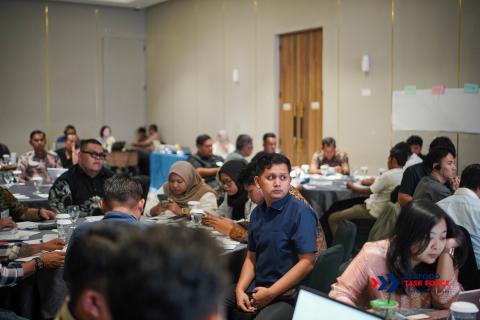
The workshop was organized in partnership with the International Organization for Migration (IOM) Indonesia, representing a core operational pillar of the STF’s broader five-year effort to improve living and working conditions on high-seas tuna vessels.
It brought together 58 participants representing more than 40 Indonesian migrant fisher placement agencies. Also present were three placement agency associations (ISMAA, APAKINDO and IMCAA) and two labor union organizations from Asosiasi Pekerja Perikanan Indonesia (AP2I) and Serikat Pekerja Perikanan Indonesia (SPPI), as well as government officials from Ministry of Indonesian Migrant Workers Protection (KP2MI) and Indonesian Migrant Worker Protection Service Center (BP3MI) Central Java. STF member companies, vessel owners and buyers including Bolton & Tri Marine, FCF, and Thai Union also attended.
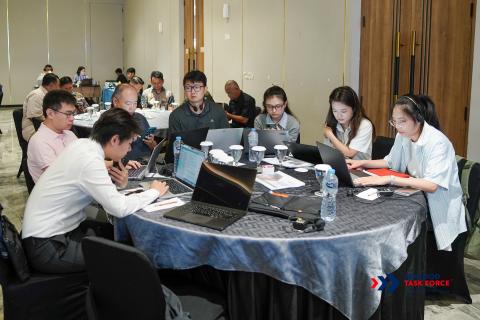
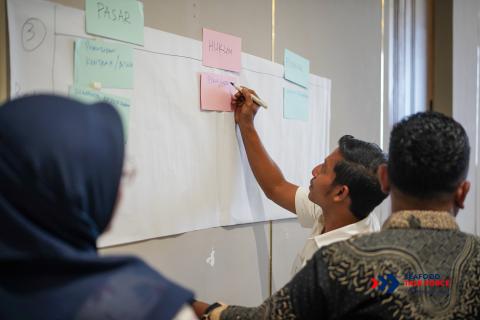
Training covered the STF Code of Conduct and Indonesia's regulatory framework, including new rules standardizing Seafarer Employment Agreements. Along with the ILO's forced labor indicators and legal analysis of collective bargaining and crew employment agreements. The sessions formed part of the STF's wider efforts to align Indonesian migrant fisher placement agencies with its Code of Conduct and clarify roles and responsibilities across the supply chain. While helping agencies identify and mitigate forced labor risks.
With STF members representing around 80% of the global tuna market, compliance is increasingly a commercial prerequisite for agencies in the sector. Discussions covered the systemic challenges faced by Indonesian migrant fisher placement agencies, including regulatory overlap between government bodies, inconsistent contracts held by crew members, and the retention of identity documents as collateral against recruitment debts, a practice flagged as high-risk for debt bondage.
Martin Thurley, CEO of the Seafood Task Force, said:
“This essential capacity building program is designed to address recurring industry challenges in the tuna supply chain - challenges that require collaboration between companies, governmental agencies and other stakeholders.
These trainings reinforce and refamiliarize Indonesian migrant fisher placement agencies with the STF Code of Conduct as well as connecting them directly with the buyers and vessel owners who rely on their services. By working through the ILO forced labor indicators and the practical realities of contracts and licensing together, we are building a shared understanding of the stepwise changes needed to move toward zero-cost, transparent recruitment.”
Those who took part in the training also raised concerns over multi-layered wage payments, limited pre-departure orientation time, and the lack of direct channels with overseas vessel owners to negotiate terms. *Among the agencies who attended are the following organizations, listed solely to acknowledge their participation and not to imply endorsement of, or affiliation with, the Seafood Task Force: PT. Aila Samudra Indonesia, PT. Anugerah Bahari Pacific, PT. Bahtera Anugrah Sentosa, PT. Baruna Jaya Sentosa, PT. Bima Samudra Bahari, PT. Binar Jaya Pratama, PT. Bintang Benuajaya Mandiri, PT. Cakra Bahari Sejati, PT. Costalia Maritim Indonesia, PT. Dua Arya Samudera, PT. Dua Jangkar Indonesia, PT. Duta Samudera Bahari, PT. Fari Anugerah Sentosa, PT. Garuda Insan Mandiri, PT. Gema Bahari Kasih, PT. Gempal Mitra Bersama, PT. Jasuma Anugrah Prima Sejahtera, PT. Java Marina Indonesia, PT. Karunia Bahtera Samudra, PT. Kunindo Altantik Internasional, PT. Laksana Maritim Jaya, PT. Lumbung Artha Segara, PT. Maju Jaya Bersama, PT. Maritim Sinar Berlian, PT. Mirana Nusantara, PT. Mutiara Jasa Bahari, PT. Novo Citra Marine, PT. Ocean Jaya Samudra, PT. Paloma Sejati, PT. Perkasa Ina Samudra, PT. Puncak Jaya Samudra, PT. Restu Karya Bersama, PT. RNT Utama Indonesia, PT. Sahabat Maritim Berdikari, PT. Sammy, PT. Samudra Ina Pratiwi, PT. Setya Jaya Samudra, PT. Shaqueena Globalindo Sejati, PT. Solomindo Pacific Internasional, and PT. Surya Mitra Bahari.
Jeffrey Labovitz, Chief of Mission IOM Indonesia, commented:
“Addressing the challenges faced by migrant fishers requires a shared commitment from all stakeholders involved in the recruitment and employment process, with the private sector serving as a key partner in advancing safe, transparent, and responsible labor mobility. Bringing together Indonesian migrant fisher placement agencies, government institutions, and industry representatives creates valuable opportunities to strengthen mutual understanding and improve migration governance. IOM is committed to supporting these collaborative efforts to enhance the protection and well-being of Indonesian fishers throughout the migration journey.”
Post-workshop, the STF will host recruitment cost training, fund compliance assessments for Indonesian agencies and engage with the governments and maritime bodies of the jurisdictions receiving migrant fishers. Meanwhile, KP2MI will finalize Memorandums of Understanding with the relevant government agencies from the receiving jurisdictions while standardizing recruitment fees. IOM will create a fishing-sector orientation guide and consult agencies, as well as the migrant fishers. This builds on STF’s ongoing regional initiatives to promote ethical recruitment across Indonesia’s fisheries sector.
By strengthening the protection and fulfilment of migrant fishers’ rights, this program supports progress towards SDG 8 on Decent Work and SDG 10 on Reduced Inequalities.
-Ends-
About the Seafood Task Force:
The Seafood Task Force (STF) was established in 2014 to restore global confidence to trade, following concerns about social and environmental abuse in global tuna and shrimp supply chains. It is made up of over 50 major retailers, brands, food service companies and their supply chain partners.
The STF drives supply chain oversight at scale, pioneering a pro-competitive approach that makes it easier for its members to meet international standards and growing due diligence requirements.
The STF is a US-based, not-for-profit trade association established for the seafood industry by the seafood industry. Its vision is a future where its members’ seafood supply chains are fully traceable, free from the risk of human rights violations and free from environmental degradation.
For more information: https://seafoodtaskforce.global/
For media inquiries, please contact: stf@thephagroup.com